SV-Series
Prices: 10 mg £89.95 (out of stock)
Cobalt Select
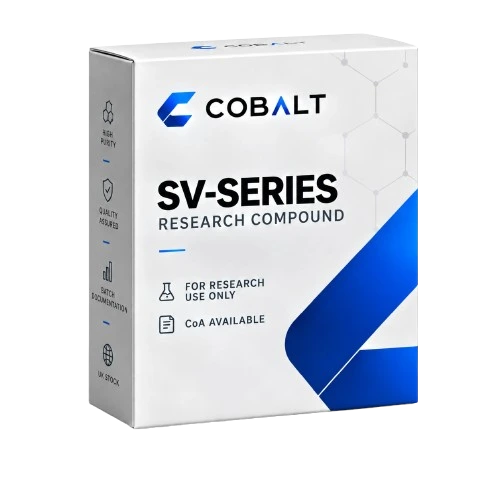
Prices: 10 mg £89.95 (out of stock)
Available sizes: 10 mg
SV-Series is a synthetic peptide used in laboratory research looking at metabolic signalling, energy regulation and the role the liver plays in processing and managing available nutrients.
The liver sits at the centre of metabolism. It helps decide what happens to nutrients once they enter circulation, whether energy is stored for later, made available for immediate use or converted into other forms.
SV-Series is studied within this wider area because peptide signals can influence the communication that helps coordinate these metabolic decisions.
Metabolism depends on different tissues working together, and the liver has a particularly important role because it responds continually to changes in nutrient availability and energy demand.
SV-Series is of interest in research looking at areas such as:
Liver metabolism: how signalling influences the way nutrients and stored energy are processed.
Energy regulation: how biological systems adjust the balance between storing energy and making it available for use.
Metabolic adaptation: how the body responds as nutritional conditions and energy requirements change.
Peptide signalling: how chemical messages help coordinate metabolic activity between different tissues.
SV-Series works as a signalling peptide. Rather than acting as a nutrient or energy source itself, it interacts with responsive biological systems and triggers signals that can influence downstream metabolic activity.
Those signals can affect the way different tissues respond to the availability of nutrients and stored energy.
The overall response depends on where that signalling takes place. The liver, pancreas and other metabolic tissues each perform different jobs, so the same wider metabolic state can produce different responses in each.
The liver acts as one of the body's main metabolic control centres.
After nutrients become available, it helps process and store them. Between periods of nutrient intake, it also helps make stored resources available again as metabolic demand changes.
This constant adjustment is controlled by a mixture of chemical and hormonal signals. SV-Series provides a way of studying how peptide signalling fits into that wider system.
Metabolism is not fixed. The way energy is handled changes throughout the day depending on nutrient availability, activity and the demands being placed on different tissues.
These changes require communication between organs rather than one metabolic pathway working independently.
Studying peptide signalling in this context can help build a clearer picture of how nutrient processing, stored energy and changing metabolic demand are coordinated.
Liver metabolism, energy regulation and peptide-mediated signalling are well-established areas of biological research. However, the metabolic system contains many overlapping signals, which makes the contribution of any single pathway difficult to interpret in isolation.
Responses can also vary between different biological models and experimental conditions, so findings should always be considered within the setting in which they were produced.
SV-Series is supplied as a laboratory research material and is not supplied for therapeutic use.
Certificates of Analysis are published for tested products and batches. A certificate is a batch-specific record: it reports what was measured, by which method, on a stated date, against a batch identifier. It is evidence about the sample analysed at the time of analysis, and it is silent on attributes it does not list and on what has happened to the material since.
The batch number is the field that connects the document to a physical vial. Where the identifier on a vial does not appear on a certificate, the certificate does not describe that vial, however thorough the analysis behind it was. Batch records can be searched directly, and the guides below explain what each field establishes and what it does not.
Supplied for laboratory research use only. Not for human or veterinary use.