R-Series
Prices: 5 mg £26.95 · 10 mg £35.95 · 20 mg £49.95 · 30 mg £70.95 · 40 mg £89.95 · 50 mg £99.95 · 60 mg £118.95
Cobalt Select
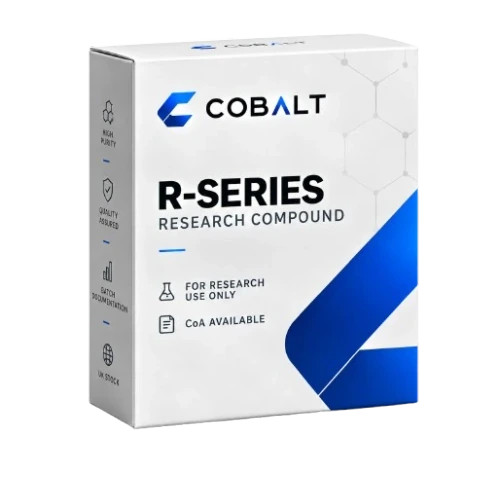
Prices: 5 mg £26.95 · 10 mg £35.95 · 20 mg £49.95 · 30 mg £70.95 · 40 mg £89.95 · 50 mg £99.95 · 60 mg £118.95
Available sizes: 5 mg, 10 mg, 20 mg, 30 mg, 40 mg, 50 mg, 60 mg
R-Series is a synthetic peptide used in laboratory research looking at how the body regulates energy, nutrients and metabolic signalling.
Metabolism is controlled by a large network of chemical signals that help different parts of the body respond to things such as food intake, available energy and changing nutrient levels. Peptides form part of that signalling system, carrying messages between cells and influencing how those cells respond.
R-Series is studied because it interacts with this broader metabolic signalling network rather than acting as a simple nutrient or chemical substrate.
Metabolic research is about more than simply measuring blood glucose or energy use. It looks at how different signals work together to control the way nutrients are processed, stored and used.
R-Series is of interest in this area because peptide signalling can influence several parts of that process at the same time.
Metabolic signalling: how cells respond to chemical signals linked with energy and nutrient regulation.
Energy balance: the relationship between energy coming into a biological system, being stored and being used.
Nutrient response: how cells and tissues react when the availability of nutrients changes.
Cell communication: how peptide signals trigger changes in activity elsewhere in the biological system.
R-Series works as a signalling peptide. Instead of directly breaking down nutrients or supplying energy itself, it interacts with responsive cells and triggers signalling inside them.
Those signals can then influence wider processes linked with metabolism, including how nutrients are handled, how energy is used and how different tissues respond to changes in their environment.
The exact response depends on the system being studied, which is why the same peptide can produce different effects depending on the cells, tissues and conditions involved.
The body does not control metabolism through one switch. It relies on many overlapping signals working together.
Some signals respond to nutrient availability, others influence how energy is stored or used, and others help coordinate the response between different tissues.
Peptides such as R-Series are useful in this field because they allow these signalling processes to be studied in a controlled way and help build a clearer picture of how metabolic regulation works as a whole.
Peptide signalling and metabolic regulation are well-established areas of biological research, but results can vary significantly between different experimental systems.
Findings from cell, tissue or preclinical studies should therefore be interpreted within the conditions in which they were produced and should not automatically be assumed to apply outside those settings.
R-Series is supplied as a laboratory research material and is not supplied for therapeutic use.
Certificates of Analysis are published for tested products and batches. A certificate is a batch-specific record: it reports what was measured, by which method, on a stated date, against a batch identifier. It is evidence about the sample analysed at the time of analysis, and it is silent on attributes it does not list and on what has happened to the material since.
The batch number is the field that connects the document to a physical vial. Where the identifier on a vial does not appear on a certificate, the certificate does not describe that vial, however thorough the analysis behind it was. Batch records can be searched directly, and the guides below explain what each field establishes and what it does not.
Supplied for laboratory research use only. Not for human or veterinary use.